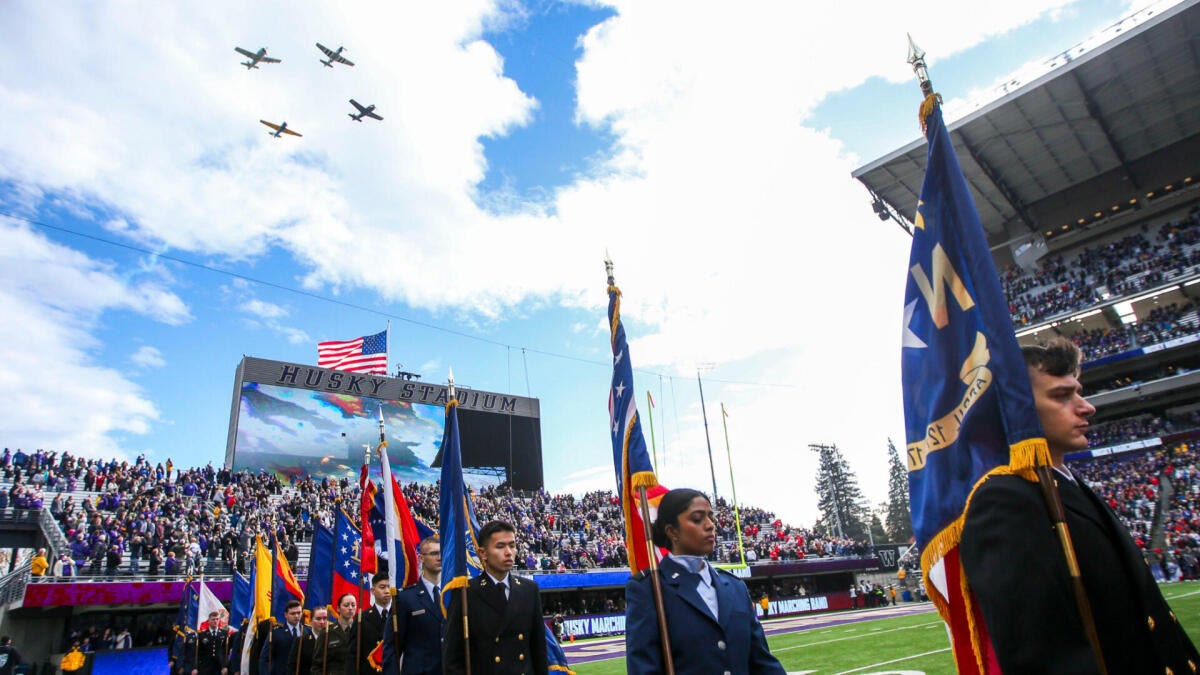
As college football front offices grow into multimillion-dollar operations, former military members are increasingly applying skills honed in service to roles in recruiting, personnel, and operations. Ahead of Veterans Day, CBS Sports spoke with four veterans — SMU director of recruiting operations Bryan Filker, North Texas assistant general manager Jarae Thurmond, Old Dominion general manager Hunter Sims, and ZRG Turnkey vice president Sean Magee — about their transitions and the challenges of entering an industry with no established pathway for veterans.
Filker served in Air Force intelligence, briefing F-22 pilots on threats from Russia, China, North Korea, and Iran. He draws a direct parallel to his current work: "My whole job was how do I understand what the enemy is trying to do to us... It's no different than pre-opponent scouting." After multiple ASVAB attempts and years of networking — including volunteering at SMU while working overnight security and Target shifts — Filker landed his role.
Thurmond spent 12 years in the Navy as a gunner's mate, teaching sailors to load Tomahawk missiles (two tactical launches at $2.1 million each). After his brother's death reignited his passion for coaching, he persisted through rejections until Georgia Southern athletic director Jared Banko gave him a chance. He now sees football's structure and high-stress environment as a natural extension of military life.
Sims, a Navy retail services specialist aboard the USS George Washington, credits Chief James Magee with teaching him leadership and the "GSD — Get sh-- done" mantra he uses at Old Dominion. Despite connections, he struggled to break in, eventually volunteering as a high school coach while serving full time before medical discharge led to a role at Troy and then the GM position.
Magee, a Naval Academy graduate who commanded a billion-dollar ship and led Navy recruiting offices, was pulled back to football by former coach Ken Niumatalolo. He now helps schools hire top executives and advocates for formal pipelines — such as NFL scouting internships — to tap into the veteran talent pool. "There are no two more alike communities than the military and sports," Magee said, emphasizing process, detail, and objective-driven mindsets.
All four veterans describe a difficult, non-linear path. While programs like Soldiers to Sidelines assist with NFL coaching transitions, no dedicated route exists for personnel roles. Sims and Magee urge college football to create more volunteer and entry-level opportunities for veterans, arguing their disciplined, adaptable skill sets are an untapped asset for front offices.


